

A new knee implant can look perfectly positioned on an X-ray and still feel wrong to the patient walking on it. The alignment may appear textbook, yet the knee feels tight in one direction, loose in another, or simply unnatural with every step. This is rarely a flaw in the implant itself. More often, the cause lies in a critical part of knee replacement surgery known as soft tissue balancing. Let's take a closer look at why proper knee balancing plays such a significant role in recovery and everyday movement.
Bone Alignment Is Only Half the Equation
Most explanations of knee replacement focus on the bone cuts, positioning the femoral and tibial components so the leg's overall alignment is restored. That part of the surgery is essential, but it is not the whole picture. The knee is held together and guided through motion by ligaments on either side of the joint, and those ligaments need to be under the right amount of tension throughout the full range of motion for the joint to function naturally. A knee can be perfectly aligned on bone and still feel unstable or stiff if the surrounding soft tissue is not properly balanced around it.
What "Balancing" Actually Means During Surgery
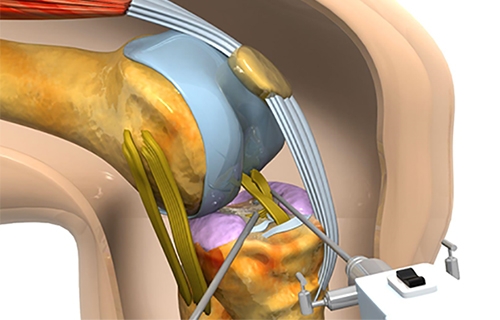
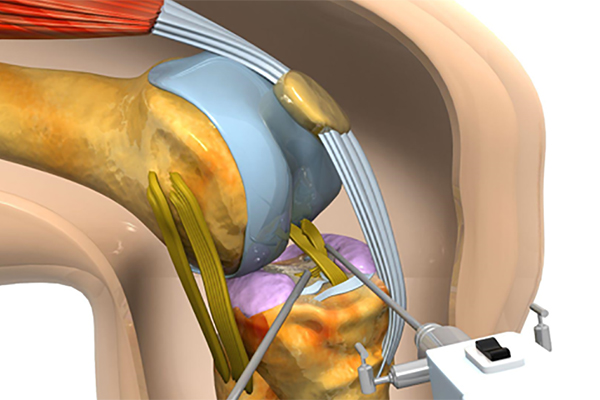
Balancing refers to adjusting the tension in the ligaments surrounding the knee so that the joint moves smoothly and symmetrically, without feeling too tight on one side or too loose on the other, whether the knee is fully extended, bent at ninety degrees, or anywhere in between. During surgery, this is assessed by checking the gaps between the bone surfaces in different positions and making small, deliberate adjustments, sometimes through soft tissue release, sometimes through subtle changes in bone preparation, until those gaps are even and consistent throughout the knee's full arc of motion.
Why Unbalanced Knees Cause Real Problems
A knee replacement that is not properly balanced does not simply feel slightly off. Imbalance can lead to persistent stiffness, a sensation of instability or giving way, abnormal wear patterns on the implant over time, and in some cases the need for a more involved revision surgery down the road. This is one of the more technically demanding parts of knee replacement, because the right amount of tension is not a fixed number. It depends on the individual patient's anatomy, the condition of their ligaments going into surgery, and how those structures respond once the joint is reconstructed.
How Robotic Technology Has Changed the Balancing Process
This is where modern surgical technology has made a meaningful difference. Robotic-arm-assisted systems allow a surgeon to build a personalized 3D model of the knee before surgery and then assess soft tissue tension in real time during the procedure, providing objective, quantifiable feedback on gap measurements at multiple points in the range of motion rather than relying solely on manual feel and visual assessment. This data-driven approach allows for more precise, reproducible adjustments, helping ensure the final balance achieved in surgery closely matches what was planned beforehand. Pairing this technology with a muscle-sparing surgical approach, which preserves more of the natural soft tissue around the joint to begin with, gives the surgeon a more accurate and less disrupted foundation from which to fine-tune that balance.
What This Means for How Your New Knee Will Feel
Patients understandably focus on questions like how long recovery will take or when they can return to normal activity, but the quality of soft tissue balancing achieved during surgery has a direct, lasting impact on those very outcomes. A well-balanced knee tends to move more naturally, feels more stable during daily activities, and is associated with higher patient satisfaction long after the incision has healed.
The Bottom Line on Knee Balance
Knee replacement is not just about replacing damaged bone and cartilage. It is about reconstructing a joint that moves the way a healthy knee should, and that requires careful attention to the ligaments and soft tissue surrounding it, not just the bone itself. Asking your surgeon how they assess and achieve balance during your specific procedure is a reasonable and informed question.
Frequently Asked Questions
1. What does knee balancing mean in knee replacement surgery?
Knee balancing refers to adjusting the tension in the ligaments around the knee so the joint moves smoothly and evenly throughout its full range of motion, rather than feeling tight or loose in certain positions.
2. Why does a knee replacement still feel unstable if the alignment looks correct?
Bone alignment and soft tissue balance are two separate factors, and a knee can appear properly aligned on imaging while still feeling unstable if the surrounding ligaments are not evenly tensioned.
3. How does robotic technology help with knee balancing?
Robotic-assisted systems provide real-time, objective measurements of soft tissue tension during surgery, allowing for more precise and reproducible adjustments compared to relying on manual assessment alone.
4. Can a poorly balanced knee replacement be fixed?
In some cases, persistent instability or stiffness from imbalance may require additional treatment or revision surgery, which is why achieving proper balance during the original procedure is so important.
5. Does knee balancing affect how long a knee replacement lasts?
Yes. Proper soft tissue balance helps reduce abnormal stress and wear on the implant over time, which can contribute to better long-term durability and function.
Reference Links:
- Soft tissue balancing in total knee arthroplasty - PubMed Central
- What is a balanced knee replacement? - PubMed Central
- The relevance of ligament balancing in total knee arthroplasty: how important is it? A systematic review of the literature - PubMed Central
- Balancing of total knee arthroplasty by bone cuts achieves accurately balanced soft tissues without the need for soft tissue releases - ScienceDirect
AUTHOR: Charles E. Claps, DO – Orthopedic Hip & Knee Reconstruction Specialist
Charles E. Claps, DO is a board-certified orthopedic surgeon specializing in hip and knee joint replacement at Resurgens Orthopaedics in the greater Atlanta area. He is highly experienced in advanced reconstructive techniques and is recognized as a leader in robotic-assisted joint replacement. Dr. Claps is committed to delivering exceptional outcomes through precision surgery, innovative technology, and personalized, patient-focused care.
Credentials & Recognition
Charles Claps, MD, earned his medical degree from the Lake Erie College of Osteopathic Medicine and completed his orthopedic surgery residency at University of Pittsburgh Medical Center - Pinnacle Health. He then pursued advanced fellowship training in Adult Joint Reconstruction at Wake Forest University. Dr. Claps is board certified by the American Osteopathic Board of Orthopedic Surgeons and the American Board of Orthopaedic Surgery. Dr. Claps is a Fellow of the American Association of Hip and Knee Surgeons, American Academy of Orthopaedic Surgeons, and the American Osteopathic Academy of Orthopedics. He has been recognized by the Surgical Review Corporation (SRC) as a Surgeon of Excellence in Minimally Invasive Hip and Knee Replacement. Dr. Claps performs more Mako robotic-assisted hip and knee replacements than any other surgeon in Georgia and frequently travels across the United States teaching fellow surgeons advanced robotic joint replacement techniques. Surgeons from around the country also visit to observe his surgical expertise firsthand.
Clinical Expertise
Dr. Claps specializes in Mako robotic-assisted hip and knee replacement, including the direct anterior approach (DAA) for hip replacement. He utilizes the latest surgical technologies to optimize implant positioning, improve recovery timelines, and enhance long-term joint function.
Dr. Claps the Director of the Robotic Center of Excellence for Hip and Knee Replacement at Piedmont Fayette. He is affiliated with Ortho South Surgery Center, Fayette Surgery Center, and Piedmont Fayette Hospital, where he provides comprehensive joint reconstruction care.
Dr. Claps is passionate about patient education and believes informed patients achieve better outcomes. He strives to ensure every patient feels comfortable, confident, and fully supported throughout their surgical journey, from consultation through recovery.
Medical Disclaimer: This information is for educational purposes only and does not constitute medical advice. For diagnosis and treatment recommendations, please consult with Dr. Claps or another qualified orthopedic specialist.